
The narrative of Libyan media today has a kind of transformation that is quietly taking place in classrooms, community centers, and university halls across Tripoli, Benghazi, and Misrata: the rise of modern media education.
Media literacy and professional journalism training are no longer viewed as academic luxuries. Instead, they are increasingly recognized as essential pillars for national stability, democratic discourse, and combating the rampant misinformation dividing the country.
The Battle Against Misinformation
In a deeply polarized society, digital literacy is a matter of public safety. Social media platforms—particularly Facebook—serve as Libya’s primary news source, making the population exceptionally vulnerable to hate speech, fabricated news, and foreign interference.
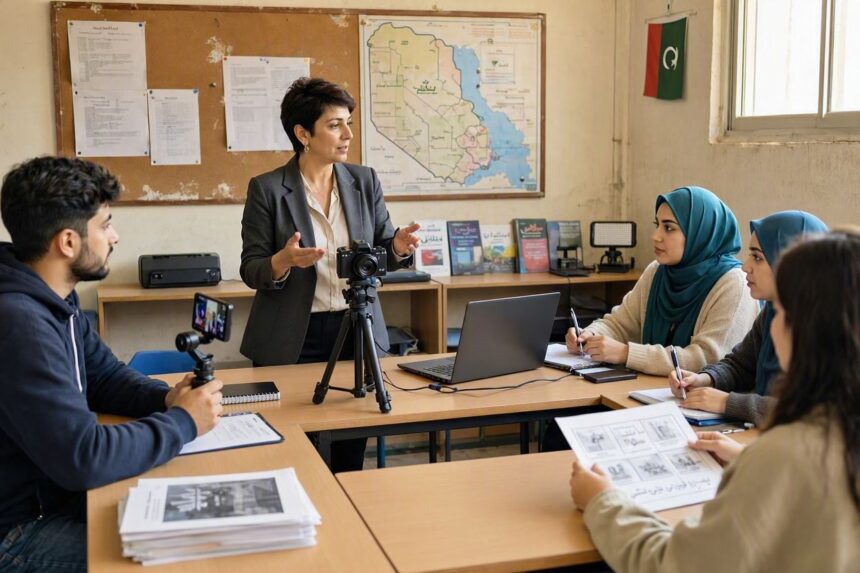
Libyan educational institutions and civil society groups are introducing media literacy programs aimed at younger generations. These initiatives teach students how to critically evaluate sources, verify images, and recognize algorithmic manipulation.
Speaking on the urgency of modernizing journalism standards, Dr. Taher Al-Ghariani, a prominent Libyan academic and media researcher, emphasized that the future of the nation’s democracy relies on professional integrity:
“We cannot build a modern state on the ruins of unprofessionalism. Media education in Libya must transition from teaching how to broadcast a message to teaching how to seek the truth responsibly. Our classrooms are the first line of defense against national fragmentation.”
Challenges on the Ground
Despite promising grassroots initiatives, media education in Libya faces severe hurdles. Chronic underfunding, outdated equipment, and security concerns continue to hamper institutional growth.
Yet, despite these challenges, the appetite for learning remains robust. Workshops hosted by local NGOs, often in partnership with international bodies, are heavily oversubscribed by young Libyans eager to tell their own stories rather than have them written by foreign correspondents or partisan actors.
Libya’s journey toward a stable, inclusive society is far from complete, but the evolution of its media education offers a glimmer of hope. By empowering the next generation of journalists and citizens with the critical tools to question, analyze, and report ethically, Libya is slowly laying the groundwork for a more transparent and democratic future.