
Output
Non-Governmental Organizations (NGOs) operating in the Arab world navigate a uniquely complex socio-political landscape that directly shapes their communication strategies. Unlike their Western counterparts, regional civil society groups must constantly balance the imperative for transparency and public engagement with restrictive regulatory frameworks and state surveillance. Consequently, NGO communication in countries across the Middle East and North Africa has evolved to prioritize subtle advocacy over confrontational messaging. Many organizations employ culturally resonant narratives, often weaving traditional values of community solidarity and charity (zakat or waqf) with modern human rights discourse to gain broader public trust and avoid direct antagonism from authorities.
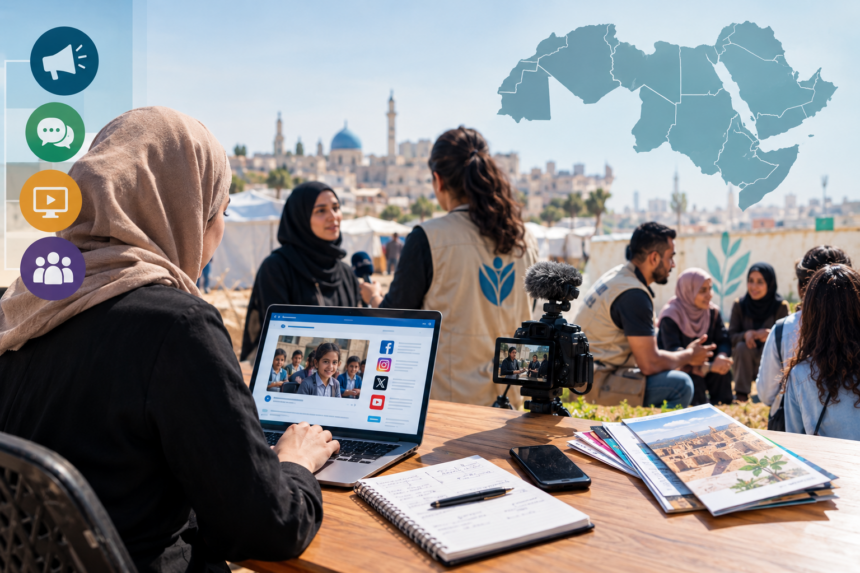
In recent years, the digital revolution has forced a profound transformation in how these entities disseminate information and mobilize support. Social media platforms—particularly Facebook, Twitter, and Instagram—have become indispensable tools for bypassing traditional, state-controlled media gatekeepers. NGOs now frequently utilize localized visual storytelling, infographics, and short videos to highlight pressing humanitarian issues, ranging from refugee displacement to water scarcity. This digital pivot not only democratizes access to information but also facilitates grassroots fundraising and transnational solidarity, allowing Arab NGOs to amplify local voices on a global stage while maintaining agility in their operational outreach.
Despite these digital advancements, the efficacy of NGO communication in the region remains heavily constrained by the digital divide and escalating cybersecurity threats. While urban youth are easily reached via smartphones, rural and marginalized populations often lack reliable internet access, requiring organizations to maintain traditional grassroots methods like community workshops, print media, and word-of-mouth networks. Furthermore, the rising wave of digital authoritarianism—manifested through targeted cyberattacks, content removal, and the criminalization of online speech—forces communicators to constantly self-censor. Ultimately, the future of NGO communication in Arab countries hinges on their ability to innovate resilient, secure, and locally attuned messaging that can inspire civic action without crossing invisible political red lines.